


The Amon Carter Museum Introduces Nearly 50 New Acquisitions
The Amon Carter - Ramirez - Seven Days - Dia de los Muertos.
The Amon Carter - Ramirez - Seven Days - Dia de los Muertos.
Source:
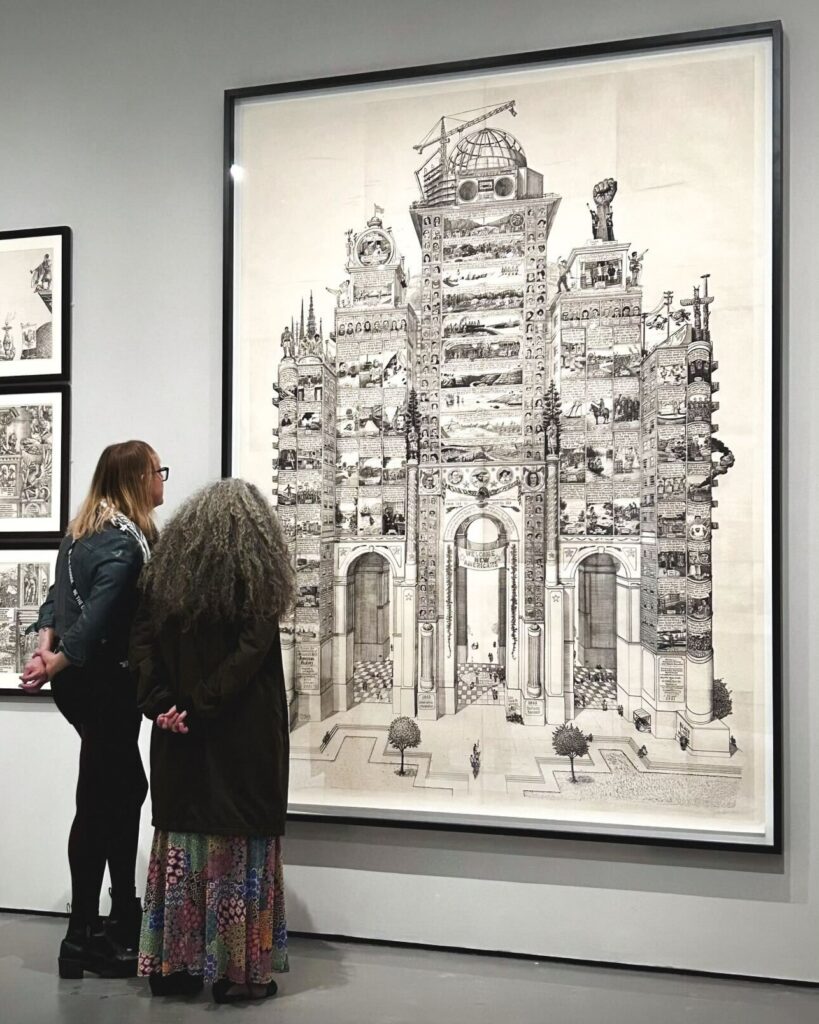
White Out: A Monumental Arch to American History, 2021, by Sandow Birk, was on view last year at Museum of Fine Arts, Boston.
Source:
The Amon Carter Museum of American Art continues to expand its storytelling around American creativity. With the acquisition of nearly 50 works this year, The Carter grows its collection and remains at the forefront, showcasing American art.
The Carter calls the new assets an “interdisciplinary and intergenerational group of artists … spanning over 150 years of artmaking.”
Highlights include a rare work by sculptor Edmonia Lewis; a critically acclaimed double portrait by Cecilia Beaux; an iconic sculpture by Elizabeth Catlett; and a small-scale bronze work by John Rhoden. It is the first work by Rhoden to enter the Carters’ collection.
“This year’s acquisitions support the Carters’ ongoing mission to expand the stories our collection tells about the history of American creativity by extending the breadth of artistic perspectives it reflects,” says Scott Wilcox, interim director and chief operating officer of the Carter.
“From rare historical works to iconic modern pieces to contemporary and photographic works revealing wide-ranging viewpoints of the American experience, this continued broadening of the Carters’ holdings is critical to enabling the Museum to engage both new and familiar audiences with a comprehensive rendering of American art’s past, present, and future.”

A study for Seymour Fogel’s mural, The Challenge of Space (ca. 1964), is among the new treasures. The mural was completed in 1966 for the opening of the Fort Worth Federal Building. The oil on plaster artwork measures 14 by 32 feet and is “still visible to the public … enshrining a centerpiece of the city’s history and culture in the Museum’s collection.”
The Carters’ holdings of contemporary photography have also expanded this year. Additions include LaToya Ruby Frazier’s “Flint is Family in Three Acts.” The series brings attention to the compromised infrastructure of Flint, Michigan. Plus, Cara Romero’s “First American Girl.”
The acquisition of Chuck Ramirez’s full series “Seven Days” expands the museum’s collection of still life art. It is featured in the Carter’s exhibition Seven Days: The Still Lifes of Chuck Ramirez, which is on view through January 4.
Charles Butt’s personal collection is also on view now at The Carter.
The Amon Carter continues to expand its holdings and stimulate the minds of art lovers.


