Charles Butt’s Personal Art Collection Debuts at the Amon Carter Museum
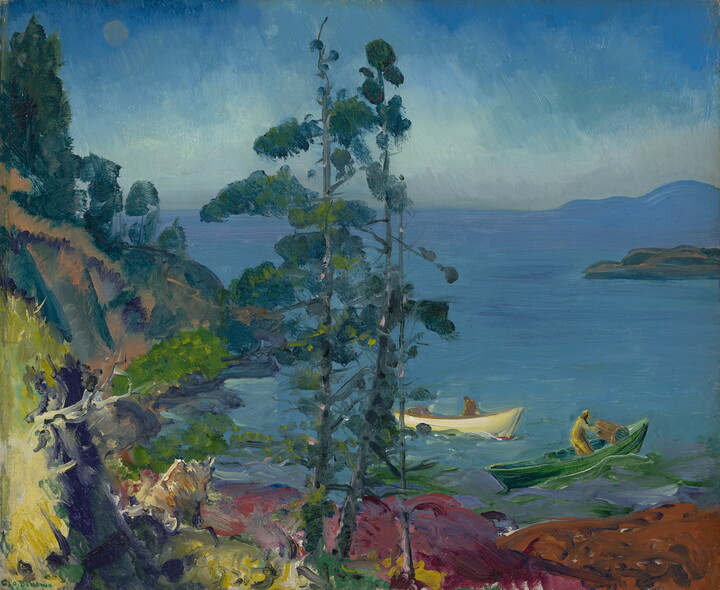
George Bellows - Evening Blue (Tending the Lobster Traps, Early Morning).
George Bellows (1882-1925), Evening Blue (Tending the Lobster Traps, Early Morning), 1916. Oil on panel.
Source:
Charles Butt’s Personal Art Collection Debuts at the Amon Carter Museum
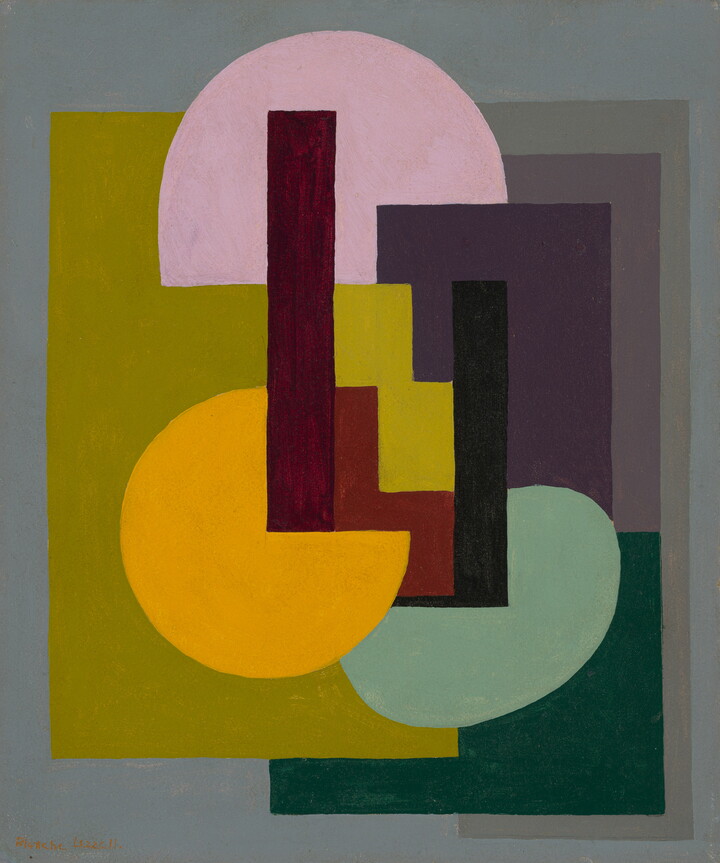
Blanche Lazzell (1878-1956) Abstraction, c. 1925 Oil on board.
Blanche Lazzell (1878-1956); Abstraction, c. 1925 Oil on board.
Source:
Charles Butt’s Personal Art Collection Debuts at the Amon Carter Museum
Charles Sheeler (1883-1965), On a Shaker Theme, 1956. Oil on canvas.
Charles Sheeler (1883-1965), On a Shaker Theme, 1956. Oil on canvas.
Source:
This September, Fort Worth’s Amon Carter Museum of American Art (the Carter) becomes the first stop on a multicity tour throughout Texas. The Carter is showcasing American Modernism from the Charles Butt Collection. It is the first exhibition dedicated to the collection of businessman, philanthropist, and Texas-native Charles Butt. The exhibit reveals the collector’s vision and over eighty works from his private collection for the first time.
The Carter, which specializes in American art, is the perfect first stop for American Modernism from the Charles Butt Collection. It opened to the public on September 7 and will run through January 25, 2026.
Charles Butt inherited the San Antonio-based H-E-B grocery chain. He is the grandson of H-E-B’s founder, Florence Butt, who started the first H-E-B grocery store in 1905 with just $60.
At age 87, Charles Butt still serves as the company’s CEO. With a net worth of $10.8 billion, according to Forbes’ most recent Billionaires List, he ranks as No. 230 on their list of the richest people in the world. Butt has invested heavily in philanthropy through his education-minded Charles Butt Foundation. He has also amassed an impressive collection of artwork, especially American Modernism.
Inside American Modernism from the Charles Butt Collection
Blanche Lazzell (1878-1956); Abstraction, c. 1925 Oil on board.
“The exhibition includes paintings and works on paper from the turn of the twentieth century through the early 1980s and features works by American modernist icons including Romare Bearden, Edward Hopper, Joan Mitchell, Alice Neel, Georgia O’Keeffe, Alma Thomas, and Andrew Wyeth, among others, many of which have never been publicly viewed,” the Carter says.
“Reflecting Butt’s commitment to education and his keen entrepreneurial eye, his collection embodies a distinctly American commitment to technical, conceptual, and aesthetic innovation.”
The exhibit unfolds in four thematic sections following the four major thought lines of Butt’s collection. These include:
Intimate Perspectives: The exhibition’s first section explores the significance and role of intimacy and trust in artmaking. Featured pairings include the friends Edward Hopper and Guy Pene Du Bois; John La Farge and Winslow Homer; and Thomas Hart Benton and his mentee Jackson Pollock. Here you’ll find works by Alice Neel’s Fire Escape (1948); and Georgia O’Keeffe’s My Backyard (1945).
The Language of the Sea: The sea is a fundamental motif in the canon of art history. Following a childhood spent in Corpus Christi, Texas, it is also a major influence on Charles Butt’s collecting practice. America’s coastlines are the focus, including ocean views by Texas artist Mary Bonner; Thomas Moran’s recently discovered 1907 watercolor Smoking Ships at Sea; and Ralston Crawford’s Bora Bora II (1975-76).
Land Progressions: This section explores the significance of land and landscape. You’ll see varying terrains by American modernist Marsden Hartley from his home state of Maine to New Mexico. Other works in this section include John Marin’s Weehawken Series, of which Butt has collected nearly every known work.
Geometric Utopias/Dystopias: The exhibition’s final section consists of geometric abstractions alongside paintings depicting urban and rural post-industrial scenes. It explores American society in an industrial age. Female artists like Blanche Lazzell and Alice Trumbell Mason, who saw themselves as revolutionaries, optimistically employed abstraction to create new visual styles.
Charles Butt’s Lasting Gift to The Carter
George Bellows (1882-1925), Evening Blue (Tending the Lobster Traps, Early Morning), 1916. Oil on panel.
“The work in Charles Butt’s collection demonstrates the complexity and breadth of American visual culture in the twentieth century,” said Shirley Reece-Hughes, senior curator of paintings, sculpture, and works on paper at the Carter.
“In conjunction with the exhibition, Charles Butt has also made a promised gift to the Carter of Rufino Tamayo’s The Family (1925),” the Carter says. It will “add further depth to the story of American creativity told by the Museum’s holdings.”
The exhibition will travel exclusively to four venues in Texas. Each stop reflects Butt’s “civic dedication and passion for sharing American visual culture with communities in his home state,” they say. The exhibition will travel to Austin’s Blanton Museum of Art in spring 2026. Then, on to the Museum of Fine Arts, Houston, in fall 2026, and finally to San Antonio’s McNay Art Museum in spring of 2027.
Luckily, Fort Worth gets a first-ever peek at Charles Butt’s collection, ahead of the rest. It adds to the excitement this fall. American Modernism from the Charles Butt Collection is on view now at the Carter.